
Insights
Quantum Computing Is No Longer a Future Problem—It’s a Business Risk Today
Quantum computing is progressing rapidly, and while cryptographically relevant quantum computers (CRQCs) do not yet exist, Australia’s Australian Cyber Security Centre (ACSC) warns that organisations should begin preparing now rather than waiting for the technology to mature.
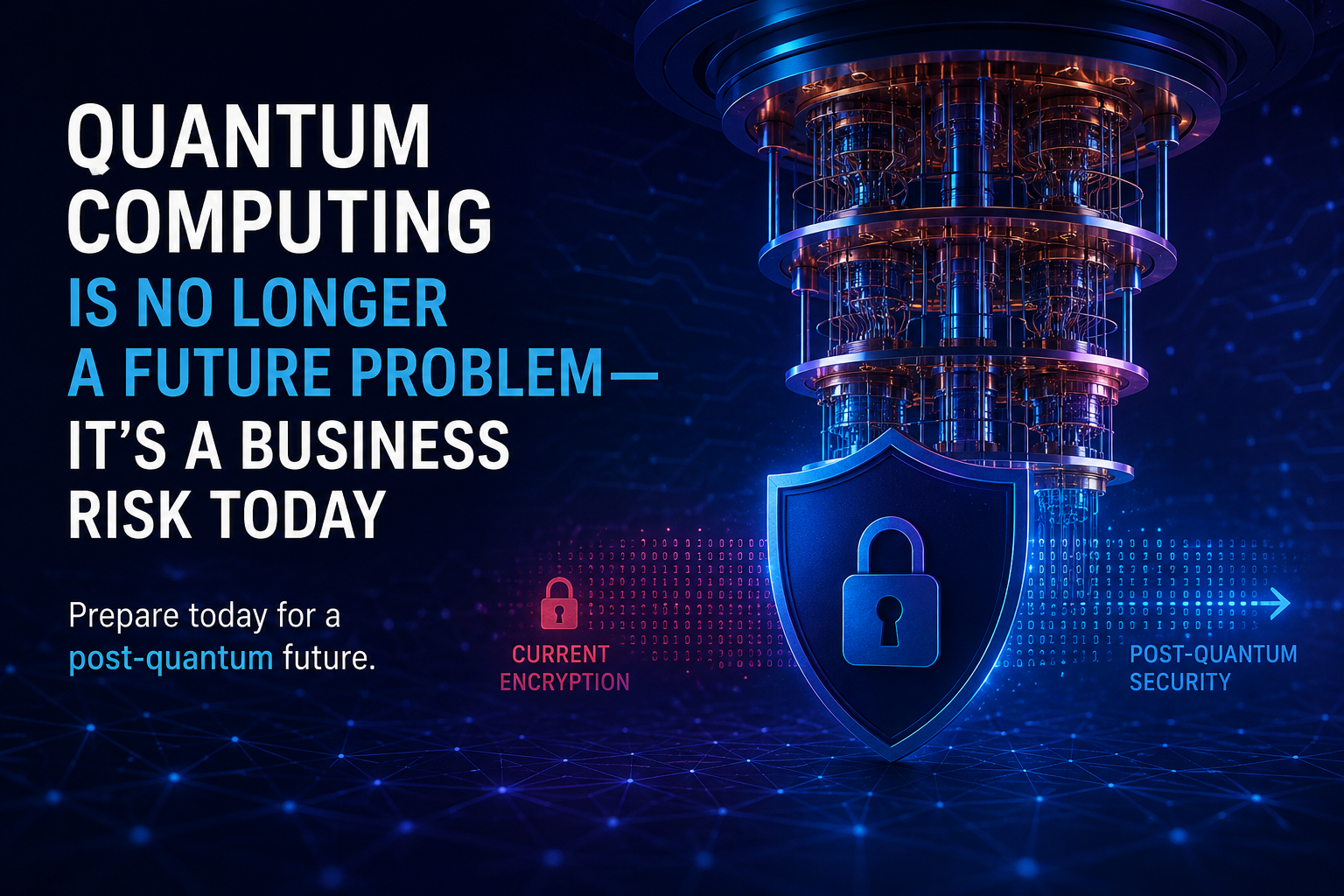
The primary concern is not that today’s systems are already broken, but that sensitive information encrypted today could be harvested by attackers and decrypted once sufficiently powerful quantum computers become available. This “harvest now, decrypt later” strategy poses a significant long-term risk for organisations handling intellectual property, financial records, healthcare information and government data.
Preparing for the quantum era is not simply a matter of replacing encryption algorithms. Many organisations operate complex environments containing legacy applications, custom software, on-premises infrastructure, operational technology and third-party systems. Transitioning these environments to post-quantum cryptography (PQC) may take several years.
The ACSC recommends organisations begin building quantum readiness now by:
- Identifying where cryptography is used throughout the organisation.
- Developing an inventory of cryptographic assets and dependencies.
- Engaging vendors about their post-quantum migration roadmaps.
- Planning gradual migration to approved quantum-resistant algorithms.
- Building cryptographic agility so future algorithm changes become simpler.
Quantum readiness extends beyond cryptography. Organisations should also consider supply chain security, cloud API exposure, workforce capability, and governance processes as quantum technologies continue to evolve.
At Sentinel Stack, we believe quantum readiness should become part of every long-term cyber security and infrastructure strategy. Our Secure by Design approach helps organisations assess existing environments, identify cryptographic dependencies, improve infrastructure resilience, and prepare practical migration roadmaps aligned with emerging industry guidance.
The transition to post-quantum cryptography will not happen overnight—but organisations that begin planning today will be significantly better positioned than those forced into reactive change tomorrow.